🎧 Hear it as a podcast (Yes, this is AI):
GEMA, the German Society for Musical Performing and Mechanical Reproduction Rights, becomes the first collecting society worldwide to develop a pioneering AI licensing model. Announced at Reeperbahn Festival 2024, it balances tech progress with creative protection, ensuring fair compensation for music creators when their works train AI and generate new AI-composed songs.
Here’s what’s inside:
The Rise of AI in Music
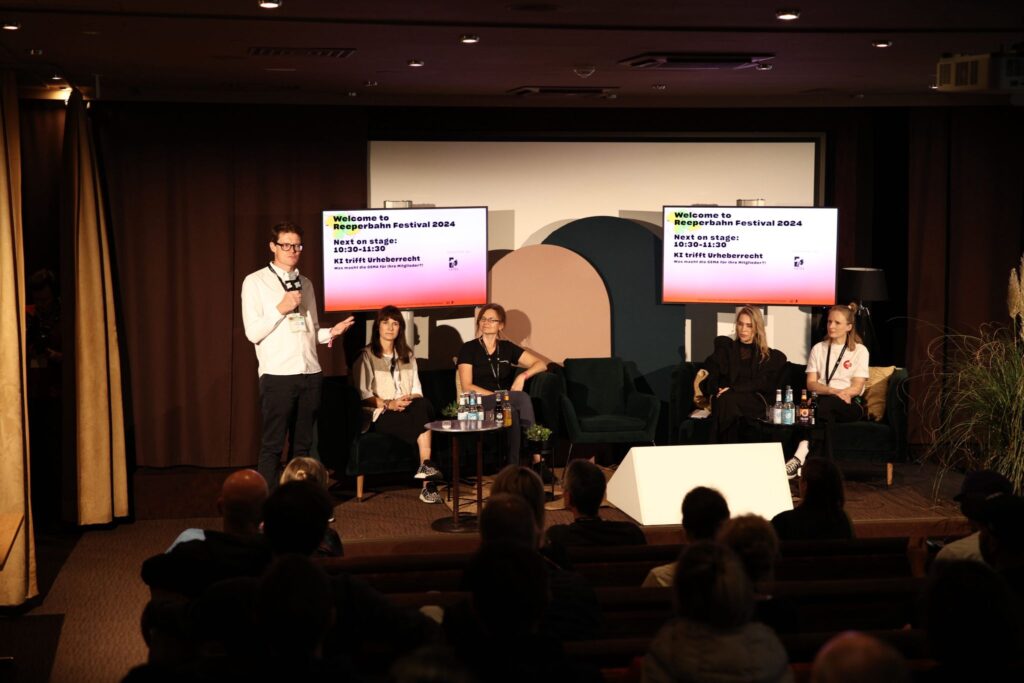
The surge of AI in creative processes presents unprecedented challenges for the music industry. On September 19, GEMA representatives joined forces with technology experts and artists in a panel titled “AI Meets Copyright” at the Reeperbahn Festival. The discussion featured:
They delved into AI’s impact on creative work, the technical capabilities of AI models, and the imperative need to protect copyrights in this new digital era.
A Multi-Billion Dollar Market
Generative AI in music is developing into a market worth billions. According to a study by Goldmedia, commissioned by GEMA and French rights organization SACEM:
- The generative AI music market is projected to exceed $3 billion by 2028.
The study sheds light on the massive impact this will have on the music industry and creative industries in general.
Introducing a New Licensing Approach
GEMA’s licensing model is the first of its kind introduced by a collecting society worldwide. It seeks to balance technological advancement with the protection of creative work. Key aspects of the model include:
- Moving beyond traditional one-off lump-sum payments (“buyouts”) for training data.
- Advocating for fair remuneration at a high level, ensuring authors are compensated for both the initial use of their work and any subsequent AI-generated content derived from it.
Artists’ Perspectives

“We must not leave the responsibility to the big technology companies,” urged Alexa Feser.
- Involvement in Value Creation: “We must be involved in value creation. It’s good that GEMA is taking up the issue and standing up for our rights.”
- Urgency: “We have to be quick because technological development is always ahead of politics.”
This sentiment echoes the concerns of many artists globally. Recent movements in the music industry highlight a growing apprehension about AI’s unchecked use of copyrighted material.
Global Concerns and Movements

Industry-Wide Implications
In an interview at the Music Biz Conference 2024, Thomas Theune of GEMA discussed the importance of such initiatives. He emphasized:
- Balancing Opportunities and Risks: While AI offers exciting possibilities for music creation and distribution, it also poses significant risks to the rights and revenues of original creators.
- Global Collaboration: The need for international cooperation to address these challenges.
The full interview can be accessed in the GEMA official interview with Thomas Theune.
Legal Frameworks and Future Steps
Discussions are underway about introducing a new remuneration right as a potential key to AI music licensing:
New Initiatives Supporting Ethical AI in Music

In addition to GEMA’s efforts, other organizations are emerging to address the ethical challenges posed by AI in music:
- Fairly Trained: A certification initiative aiming to ensure that AI models obtain proper consent for training data. This organization works to certify AI models that respect artists’ rights, promoting transparency and fairness in AI training practices.
- AIOK: An organization advocating for the harmonious coexistence of AI and music through ethical practices. AIOK believes that AI and music can coexist ethically, emphasizing that ethical guidelines are crucial for the future of AI-generated music.
These organizations highlight the growing movement towards ethical AI practices in the music industry, reinforcing the importance of consent, transparency, and fair compensation for creators.
Calls for Collective Action
The music industry is rallying for collective action to address the challenges posed by AI:
“As creators, we need to be vigilant and proactive,” Feser concluded.
- Optimism for the Future: “I am convinced that the human element in music will survive.”
- Collective Responsibility: “It requires us to stand together and ensure that our rights are not overshadowed by technological advancements.”
Looking Forward
The introduction of GEMA’s licensing model is a significant step toward addressing the complex interplay between AI technology and music creation. It underscores the necessity for legal frameworks that:
- Adapt to Technological Innovations: Ensuring that advancements do not come at the expense of artists.
- Preserve Rights and Revenues: Protecting the livelihoods of those who create the music we cherish.
As the industry watches closely, there’s hope that this model will inspire similar initiatives worldwide, ensuring that as AI continues to evolve, it does so with respect for the creators who form the backbone of the music industry.
About GEMA
GEMA represents the copyrights of over 95,000 members, including composers, lyricists, and music publishers in Germany, as well as over two million rights holders worldwide. As one of the largest societies for creators of musical works globally, GEMA plays a pivotal role in advocating for artists’ rights in the ever-evolving music industry landscape.
For more insights on the evolving landscape of AI in music, visit AI Musicpreneur.